Thursday, January 28, 2016

Day 4

What's the difference between

this, "Study after Velasquez's portrait of Pope Innocent X?"
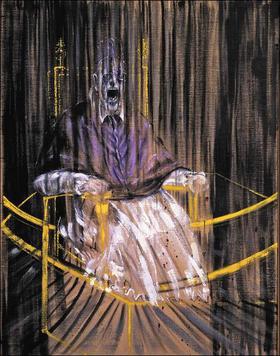
 https://upload.wikimedia.org/wikipedia/en/5/56/Study_after_Velazquez%27s_Portrait_of_Pope_Innocent_X.jpg

and  this, Hello Kitty!

Image result for hello kitty


 Groups and time to work.  Library?

HW-  Preparing for presenations.  Should we discuss expectations?

Monday, January 25, 2016

Day 3

Journal-

What is culture and how is it created?


Quick exercise-  Thinking and writing.

Thinking, first-

When a person says don't throw stones if you live in a glass house they mean not to blame another if you aren't perfect.   This means this because if you throw a stone or blame someone they will likely put the blame back on your or throw a stone back at you.  If you live in a glass house and they throw stones at you or blame you, then your house will shatter and that would be a problem.  In other words, don't point your finger at others if you have faults of your own.

When a person says that you shouldn't put all your eggs in one basket they mean that.......

This means this because....


2.  Groups and plans.

3.  When are presentations due?-  Feb 4th

4.  Class time to work on Presentations?  Library?

5.  Writing assignments based on presentations?  It's up to you with approval.

6.  HW- presentation work.

7.  This is a gloss-  In this class, we will touch upon and briefly dip a toe in, but we won't swim.

Thursday, January 21, 2016

What is postmodernism?

So, based on your brief research, what the heck is postmodernism?

What were the topics we chose to focus on?

Literature, Art, Technology, and...music, architecture.


Presentations, quick.

Then, some thinking stuff.

How to be an observer and thinker-  deconstruction?

Close reading of an advertisement.

Using the definition from the book...annotation HW- 

Groups and plans going forward... where do we start?

HW-

What things should presentations include?


Art Periods/
Movements
Characteristics Chief Artists and Major Works Historical Events
Stone Age (30,000 b.c.–2500 b.c.) Cave painting, fertility goddesses, megalithic structures Lascaux Cave Painting, Woman of Willendorf, Stonehenge Ice Age ends (10,000 b.c.–8,000 b.c.); New Stone Age and first permanent settlements (8000 b.c.–2500 b.c.)
Mesopotamian (3500 b.c.–539 b.c.) Warrior art and narration in stone relief Standard of Ur, Gate of Ishtar, Stele of Hammurabi's Code Sumerians invent writing (3400 b.c.); Hammurabi writes his law code (1780 b.c.); Abraham founds monotheism
Egyptian (3100 b.c.–30 b.c.) Art with an afterlife focus: pyramids and tomb painting Imhotep, Step Pyramid, Great Pyramids, Bust of Nefertiti Narmer unites Upper/Lower Egypt (3100 b.c.); Rameses II battles the Hittites (1274 b.c.); Cleopatra dies (30 b.c.)
Greek and Hellenistic (850 b.c.–31 b.c.) Greek idealism: balance, perfect proportions; architectural orders(Doric, Ionic, Corinthian) Parthenon, Myron, Phidias, Polykleitos, Praxiteles Athens defeats Persia at Marathon (490 b.c.); Peloponnesian Wars (431 b.c.–404 b.c.); Alexander the Great's conquests (336 b.c.–323 b.c.)
Roman (500 b.c.– a.d. 476) Roman realism: practical and down to earth; the arch Augustus of Primaporta, Colosseum, Trajan's Column, Pantheon Julius Caesar assassinated (44 b.c.); Augustus proclaimed Emperor (27 b.c.); Diocletian splits Empire (a.d. 292); Rome falls (a.d. 476)
Indian, Chinese, and Japanese(653 b.c.–a.d. 1900) Serene, meditative art, and Arts of the Floating World Gu Kaizhi, Li Cheng, Guo Xi, Hokusai, Hiroshige Birth of Buddha (563 b.c.); Silk Road opens (1st century b.c.); Buddhism spreads to China (1st–2nd centuries a.d.) and Japan (5th century a.d.)
Byzantine and Islamic (a.d. 476–a.d.1453) Heavenly Byzantine mosaics; Islamic architecture and amazing maze-like design Hagia Sophia, Andrei Rublev, Mosque of Córdoba, the Alhambra Justinian partly restores Western Roman Empire (a.d. 533–a.d. 562); Iconoclasm Controversy (a.d. 726–a.d. 843); Birth of Islam (a.d. 610) and Muslim Conquests (a.d. 632–a.d. 732)
Middle Ages (500–1400) Celtic art, Carolingian Renaissance, Romanesque, Gothic St. Sernin, Durham Cathedral, Notre Dame, Chartres, Cimabue, Duccio, Giotto Viking Raids (793–1066); Battle of Hastings (1066); Crusades I–IV (1095–1204); Black Death (1347–1351); Hundred Years' War (1337–1453)
Early and High Renaissance (1400–1550) Rebirth of classical culture Ghiberti's Doors, Brunelleschi, Donatello, Botticelli, Leonardo, Michelangelo, Raphael Gutenberg invents movable type (1447); Turks conquer Constantinople (1453); Columbus lands in New World (1492); Martin Luther starts Reformation (1517)
Venetian and Northern Renaissance (1430–1550) The Renaissance spreads north- ward to France, the Low Countries, Poland, Germany, and England Bellini, Giorgione, Titian, Dürer, Bruegel, Bosch, Jan van Eyck, Rogier van der Weyden Council of Trent and Counter-Reformation (1545–1563); Copernicus proves the Earth revolves around the Sun (1543
Mannerism (1527–1580) Art that breaks the rules; artifice over nature Tintoretto, El Greco, Pontormo, Bronzino, Cellini Magellan circumnavigates the globe (1520–1522)
Baroque (1600–1750) Splendor and flourish for God; art as a weapon in the religious wars Reubens, Rembrandt, Caravaggio, Palace of Versailles Thirty Years' War between Catholics and Protestants (1618–1648)
Neoclassical (1750–1850) Art that recaptures Greco-Roman grace and grandeur David, Ingres, Greuze, Canova Enlightenment (18th century); Industrial Revolution (1760–1850)
Romanticism (1780–1850) The triumph of imagination and individuality Caspar Friedrich, Gericault, Delacroix, Turner, Benjamin West American Revolution (1775–1783); French Revolution (1789–1799); Napoleon crowned emperor of France (1803)
Realism (1848–1900) Celebrating working class and peasants; en plein air rustic painting Corot, Courbet, Daumier, Millet European democratic revolutions of 1848
Impressionism (1865–1885) Capturing fleeting effects of natural light Monet, Manet, Renoir, Pissarro, Cassatt, Morisot, Degas Franco-Prussian War (1870–1871); Unification of Germany (1871)
Post-Impressionism (1885–1910) A soft revolt against Impressionism Van Gogh, Gauguin, Cézanne, Seurat Belle Époque (late-19th-century Golden Age); Japan defeats Russia (1905)
Fauvism and Expressionism (1900–1935) Harsh colors and flat surfaces (Fauvism); emotion distorting form Matisse, Kirchner, Kandinsky, Marc Boxer Rebellion in China (1900); World War (1914–1918)
Cubism, Futurism, Supremativism, Constructivism, De Stijl (1905–1920) Pre– and Post–World War 1 art experiments: new forms to express modern life Picasso, Braque, Leger, Boccioni, Severini, Malevich Russian Revolution (1917); American women franchised (1920)
Dada and Surrealism (1917–1950) Ridiculous art; painting dreams and exploring the unconscious Duchamp, Dalí, Ernst, Magritte, de Chirico, Kahlo Disillusionment after World War I; The Great Depression (1929–1938); World War II (1939–1945) and Nazi horrors; atomic bombs dropped on Japan (1945)
Abstract Expressionism (1940s–1950s) and Pop Art (1960s) Post–World War II: pure abstraction and expression without form; popular art absorbs consumerism Gorky, Pollock, de Kooning, Rothko, Warhol, Lichtenstein Cold War and Vietnam War (U.S. enters 1965); U.S.S.R. suppresses Hungarian revolt (1956) Czechoslovakian revolt (1968)
Postmodernism and Deconstructivism (1970– ) Art without a center and reworking and mixing past styles Gerhard Richter, Cindy Sherman, Anselm Kiefer, Frank Gehry, Zaha Hadid Nuclear freeze movement; Cold War fizzles; Communism collapses in Eastern Europe and U.S.S.R. (1989–1991)


Periods of English Literature


Anglo-Saxon or Old English literature (500 A.D to the 12th century): the English literature of this period is made up entirely of oral poetry. The characteristic literary form is alliterative accentual verse. The greatest literary achievement of the age is the epic Beowulf (written down in ca. 1000).
Middle English literature (from the end of the 12th century to 1500): a new period begins because the Norman Conquest (1066) has brought significant changes both to the English language and to literature. The greatest poet of this period is Geoffrey Chaucer (ca.1343-1400). Characteristic genres are the verse romance (e.g. Sir Gawain and the Green Knight, or Chaucer’s Troilus and Criseyde), mystery plays (e.g. the Second Shepherd’s Play), and morality plays (e.g. Everyman).


This is a period that spans the 16th and 17th centuries in England (note that in Italy the Renaissance started as early as the 14th century). The most famous English authors in this period are Sir Thomas More, Edmund Spenser, William Shakespeare, John Donne, John Milton. The reign of Queen Elizabeth (1558-1603) is usually considered to be the high point of the English Renaissance and is often referred to as the Elizabethan era.
Note that in Europe the Renaissance typically ends in what is described as the Baroque period. Although in art and architecture this category is applicable to British art history, as well, in literature there was no distinct baroque period in Britain.


Although such Renaissance authors as John Milton and Andrew Marvell died long after the Restoration of the Stuarts took place. 1660, the year of the Restoration, is still regarded as the start of a new era. This period is predominantly neo-classical in its aesthetic attitude (especially the Augustan age 1660-1740) and characteristically rationalistic in its outlook. For the latter reason this era is also often referred to as the Age of Reason, the Age of Common Sense, or the Enlightenment. Characteristic authors are John Dryden, Alexander Pope, Jonathan Swift, Samuel Johnson. The 18th century also saw the rise of the English novel. The most important English novelists of the period were Daniel Defoe, Samuel Richardson, Henry Fielding, Lawrence Sterne.

Romanticism (1789-1832) 

probably started earlier in England than in any other European country. The characteristic achievement of the era is to be found in the poetry of William Blake, William Wordsworth, Samuel Taylor Coleridge, George Gordon Byron, Percy Bysshe Shelley, and John Keats.
Note that in European literature the term Romanticism is usually used to describe the period starting with the 1830’s. The dates of English Romanticism given above roughly correspond to German ‘early romanticism’ (Frühromantik), while the period of European Romanticism covers approximately the English Victorian Age.
The Victorian period covers the years of Queen Victoria’s reign (1837-1901). Victorian poetry, as practiced variously by such authors as Alfred Tennyson, Robert Browning, Algernon Charles Swinburne, Dante Gabriel Rossetti, is more or less a continuation of the traditions of English Romanticism. The Victorian era is also the heyday of the novel. Chales Dickens, the Brontë sisters, William Makepeace Thackeray, George Eliot and Thomas Hardy all wrote their masterpieces in this period.

Pre World War II

perhaps the most characteristic literary achievement of British literature before 1945 is the modernism associated with the names of Henry James, Joseph Conrad, T. S. Eliot, James Joyce, Virginia Woolf and others. It is characterised by experiments in form and style, and a breaking away from established rules and conventions.

Post-war literature (postmodernism): 

 as it is practically the present, this is the most difficult period to define, especially as there is no clear dividing line between modernism and post-modernism. The post-war period, however, produced experimental techniques in all genres, such as the Theatre of the Absurd, associated with Samuel Beckett and Harold Pinter, and new modes in poetry and fiction, too. Some outstanding authors in English literature are Philip Larkin, Ted Hughes, Salman Rushdie, John Fowles, Kazuo Ishiguro and Tom Stoppard.


https://btk.ppke.hu/uploads/articles/135505/file/introduction/satellite/literary_history.html

Friday, January 15, 2016

First Day Stuff.

1.  Welcome, syllabus, other lame stuff.

2.  Book and date needed.

4.  Class Plan-- Class description-- change on syllabus.

3.  HW- 

Return with a definition of post-modernism from a credible source.   Create a prezi and within that prezi provide the definition and a description of why you think the source is credible.


Wednesday, January 13, 2016

Well, actually-

This blog is for PC HUM 108-  Intro to contemporary humanities.


Book- 

Introducing Postmodernism: A Graphic Guide (Paperback)

by Richard Appignanesi